AI agents trained to run experiments in wet labs
Google Research: Grounding AI agents in biological reality: Building blocks for autonomous wet labs
General Science
Get smart on it
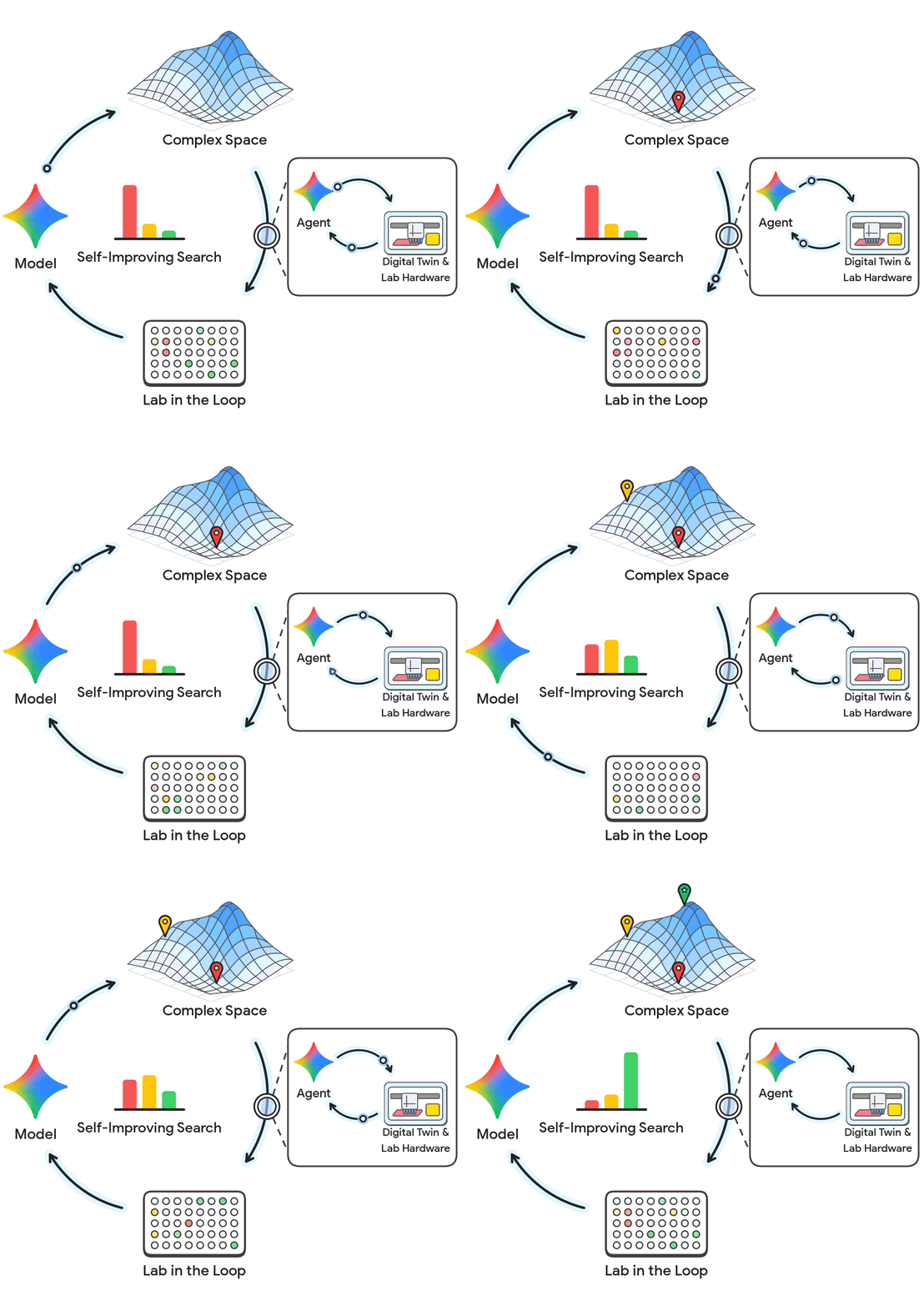
AI agents are being trained to run experiments in physical laboratory settings by combining artificial intelligence with robotic lab equipment. This matters because frontier AI systems struggle with reasoning about three-dimensional physical spaces and real-world constraints, which limits their ability to navigate the enormous number of possible molecular designs needed for drug discovery. The research addresses this gap through a framework that gives AI agents live tracking of lab conditions and safety checks before executing experiments, then learns from actual experimental results across repeated cycles. In test cases with protein-binding molecules, agents improved their design accuracy significantly by analyzing wet-lab readouts and adjusting their strategies accordingly, demonstrating how AI can self-improve through real-world scientific feedback rather than simulation alone.
Relevant courses
Want to go deeper than the news? Explore live, cohort-based AI courses taught by practitioners.
Browse AI courses on MavenRelated news

Replit is no longer working with Anthropic, CEO says
Masad said the decision was made for a number of different reasons, including cost. Replit announced a partnership with OpenAI in August, but there was never any indication that it was no longer with Anthropic.

Jev is Vercel’s fastest-adopted AI model ever
The data comes from Vercel's AI gateway, a unified API service similar to OpenRouter.

ChatGPT can peek at your Chrome tabs now
OpenAI's ChatGPT Atlas browser is gone, but now ChatGPT's Google Chrome extension is getting some upgrades that allow it to use the browser tabs you already have open. With the extension installed, OpenAI says ChatGPT can now view your browser tabs when you tag Chrome in ChatGPT's web or desktop app, posting a demo video showing someone asking ChatGPT to compare the three tabs they have open with sofas they're considering. A few big upgrades for Chrome users today! We're bring
Also reported by The Decoder

Bringing GPT-Rosalind to academic research labs
Introducing the Rosalind Academic Plan, offering eligible academic labs sponsored access to GPT-Rosalind and tools to advance life sciences research.
Also reported by The Decoder

Replit’s CEO says the future of work is the ‘self-driving company’
Replit CEO Amjad Masad envisions a future of “self-driving companies,” where AI agents handle day-to-day tasks and people focus on higher-level decisions.

Amazon’s Bee launches two new personal AI devices, starting at $75
Amazon-owned Bee has launched its first new AI devices since its acquisition, including an updated wearable and a credit-card-sized recorder that attaches to smartphones. The devices can summarize conversations, create to-do lists, and integrate with Alexa and Amazon shopping, with prices starting at $74.99.
Also reported by The Verge