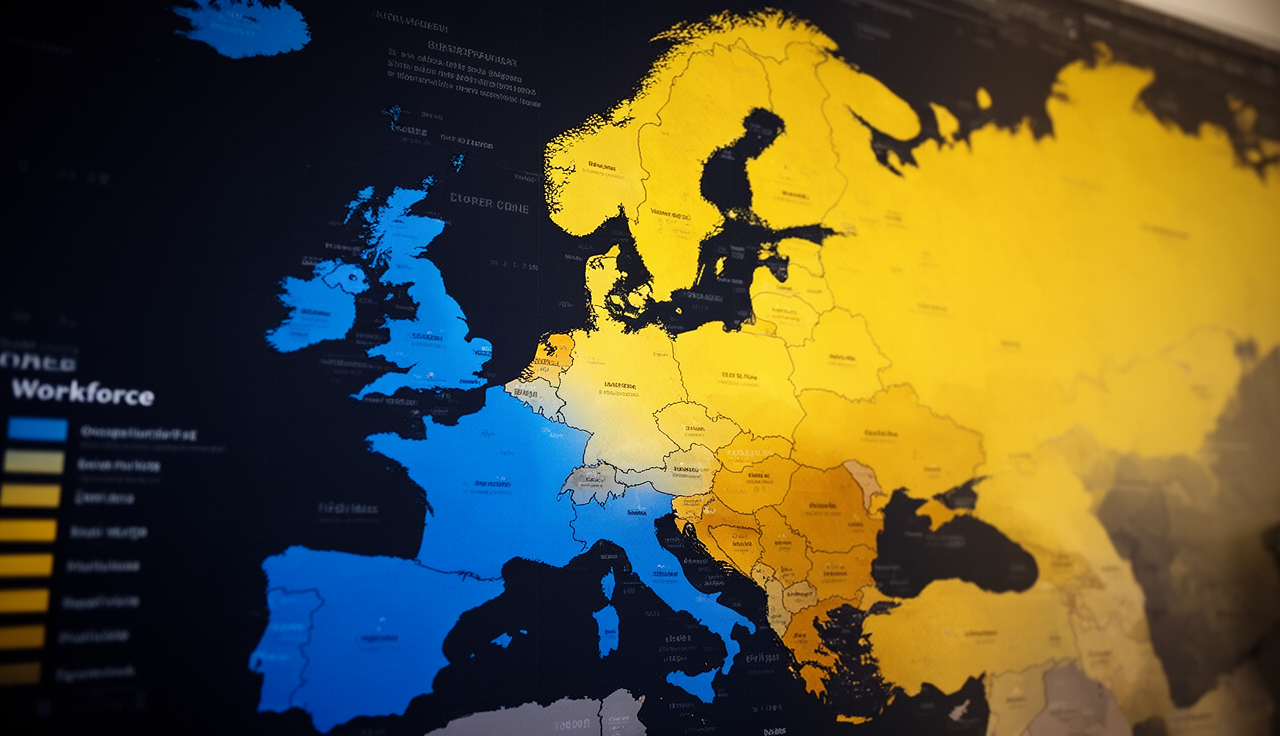
Mapping Europe’s AI Workforce Opportunity
A new OpenAI report maps how AI could reshape jobs across the EU, highlighting which occupations may face automation, growth, or workflow changes.
Get smart on it
OpenAI released a report applying its AI Jobs Transition Framework to Europe's labor market, categorizing occupations into four types: those that may grow with AI, those with higher automation potential, those likely to reorganize, and those with less immediate change. The report matters because AI capabilities spread quickly across borders while labor markets change slowly and are shaped by local institutions, licensing systems, and the need for human services, making it crucial to understand where and when AI will impact specific jobs. The framework found that about 12 percent of EU employment may grow with AI, 14 percent faces higher automation potential, 27 percent will likely reorganize, and 47 percent faces less immediate change, with significant variation across countries. For policymakers and employers, the report serves as a planning map to identify and prepare for transition pressures and opportunities before they appear in headline employment statistics.
Related news

Anthropic says Alibaba may have copied Claude just by asking questions
Anthropic

Ford rehires ‘gray beard’ engineers after AI falls short
"Mistakenly we thought that by just introducing artificial intelligence ... that would produce a high-quality product.”

Prosecutors used ChatGPT logs as evidence in the Palisades fire trial
Jonathan Rinderknecht was facing arson charges for setting a fire on New Year's Day in 2025, which became one of the deadliest wildfires in LA history. To make their case, prosecutors turned to location data from his iPhone, security camera footage, and witness testimony. But they also turned to his ChatGPT logs. Prosecutors said that Rinderknecht had ChatGPT generate images of fire, asked the chatbot, "Why am I so angry all the time?", and ranted to it about how the wealthy we


